
← Back to skin notes

Eight forms of hyaluronic acid: what the number really tells you

How to read the toner’s 1,100 ppm sodium hyaluronate and seven additional HA-related ingredients without treating a count as a quality score.

YOURSKIN+ SKIN NOTES · Ingredient notes

Hyaluronic acid is a humectant widely used in toners, essences and lotions because it attracts and holds water within a cosmetic formula. An ingredient list may use names such as hyaluronic acid, sodium hyaluronate and several hydrolysed or cross-linked derivatives.

What the toner label says

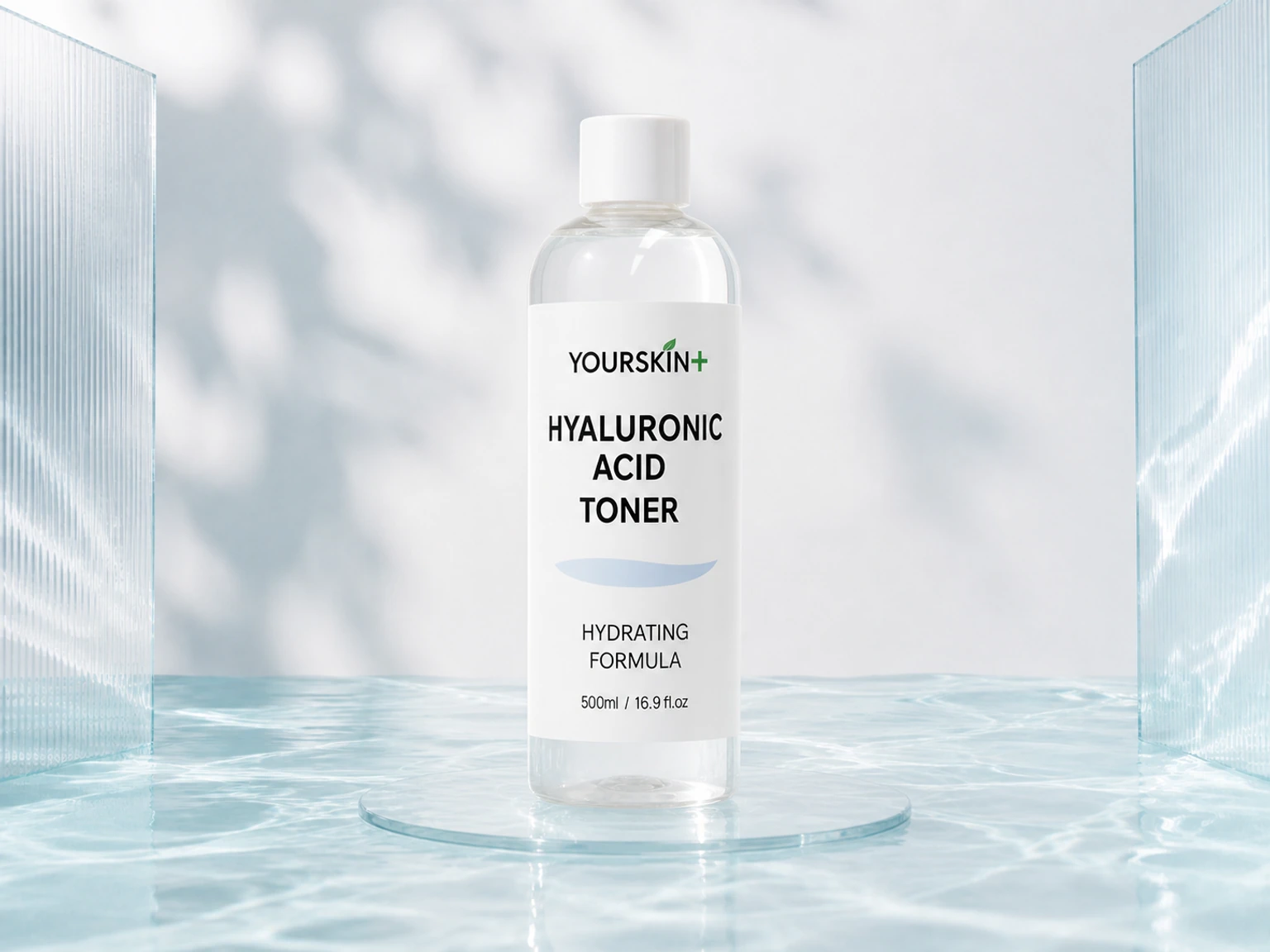
The Hyaluronic Acid Toner lists sodium hyaluronate at 1,100 ppm plus seven additional HA-related ingredients. That is the basis for describing it as an eight-form HA formula. Centella extract, panthenol and allantoin are also listed.

More types do not automatically mean more moisturising performance. Amount, supporting humectants, texture and the quantity applied all matter. A count is a useful formula clue—not a universal quality score.

Use it immediately after cleansing with palms or a cotton pad. Add two or three thin layers where skin feels dry, then follow with a moisturising step such as Aqua Lotion. Explore the names, products and common questions in our Hyaluronic Acid Atlas.
EVIDENCE & SOURCES

Sources checked alongside this note

These regulatory and research sources concern ingredients; they do not directly establish efficacy for an individual finished product.

  1. Efficacy of cream-based novel formulations of hyaluronic acid of different molecular weights in anti-wrinkle treatmentPubMed · Journal of Drugs in Dermatology · 2011
  2. Safety Assessment of Hyaluronates as Used in CosmeticsCosmetic Ingredient Review · 2023
  3. A Systematic Review of the Effect of Centella asiatica on Wound HealingPMC · International Journal of Environmental Research and Public Health · 2022
  4. Safety Assessment of Centella asiatica-Derived Ingredients as Used in CosmeticsCosmetic Ingredient Review · 2015
  5. Dexpanthenol enhances skin barrier repair and reduces inflammation after sodium lauryl sulphate-induced irritationPubMed · Journal of Dermatological Treatment · 2002
  6. Safety Assessment of Panthenol, Pantothenic Acid, and Derivatives as Used in CosmeticsCosmetic Ingredient Review · 2017

CONNECTED FORMULAS

Products in this article